
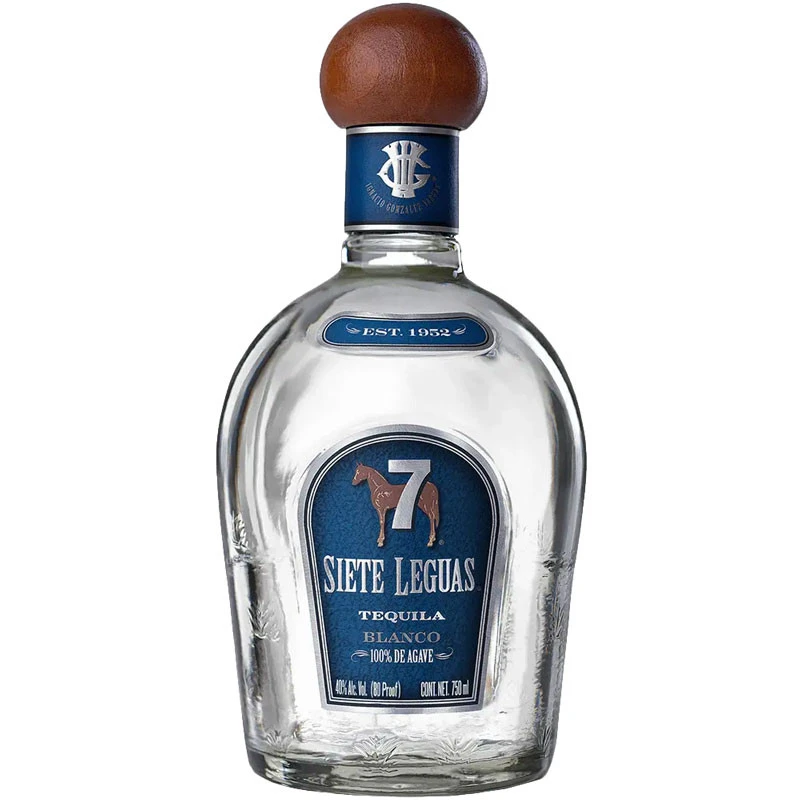
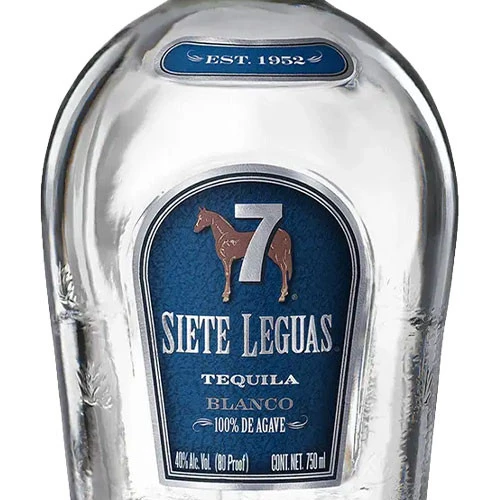

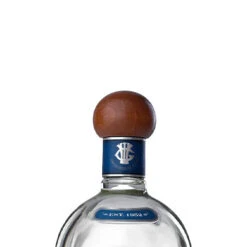
Siete Leguas Blanco Tequila
Original price was: $48.99.$34.29Current price is: $34.29.
Proof80 (40% ABV) each
*Please note that the ABV of this bottle may vary
- Quick responses, top-notch service.
- Efficient and effective customer service, online.
- Discover a world of quality products.
- Multiple payment methods, safe and reliable

About Siete Leguas Blanco Tequila
Siete Leguas (7 leagues) Tequila is named after the horse of Pancho Villa ― one of the country’s most prominent generals during the Mexican Revolutionary War that began in 1910. Today, Don Ignacio Gonzales Vargas pays tribute to the Mexican hero, producing quality tequila on his small farm in Jalisco, Mexico. The estate-grown blue Weber agaves are harvested at around 10 years of age, and the piñas (hearts) are slowly cooked in masonry ovens, softening the fibers and caramelizing the sugars within. These are then crushed using a stone, donkey-pulled mill, as tradition dictates. After the juice is fermented, the wash is distilled twice using copper-pot stills. The award-winning Blanco expression is bottled immediately after distillation, and thus has powerful notes of agave and warm pepper that lead to hints of vanilla and cinnamon.
Grab your bottle of this beloved tequila today!
About Tequila Siete Leguas
As the Mexican Revolutionary War began in 1910, José Doroteo Arango Arámbula — commonly referred to as Pancho Villa — joined the pro-democracy forces of Francisco Madero, and eventually rose through the ranks to become one of the country’s most prominent generals. Between 1910 and 1914, Villa fought in nine major skirmishes, all of them successful. He was a masterful tactician — the strategies Villa leveraged during the war were studied by the United States Army — and his image was eventually immortalized with that of his favorite horse, 7 Leguas (Seven Leagues).
Today, nearly a century after his death in 1923, Don Ignacio Gonzales Vargas pays tribute to the Mexican hero with Tequila 7 Leguas. Vargas’s estate, which is situated in the Jalisco region of Mexico, is home to a tiny farm that specializes in the growth and maturation of blue weber agave.
After the estate-grown agave have matured for nearly a decade, they are harvested by expert jimadors, who test each batch of agave in order to ensure that the sugar content of the piñas — the heart of the agave plant — is enough to produce a rich and flavorful tequila. Then, the piñas are slowly cooked in masonry ovens under the watchful eye of a stoker. The heat from the ovens softens the fibers of the piñas, and caramelizes their natural sugars. The cooked piñas are then crushed under the weight of a traditional stone wheel that is pulled by a mule, and the remaining agave juice is fermented in stainless steel fermentation tanks using a unique strain of yeast developed specifically for the distillation of tequila. Following fermentation, the agave wash is twice distilled through copper-pot stills.
About Tequila
Although tequila has developed a bad reputation, there’s more to the spirit than just shots on a Saturday night.
This traditional Mexican drink origins in the state of Jalisco when according to a local legend, lightning struck an agave cactus before the Nahua tribe drank its warm nectar. Behold, tequila.
Legally, tequila has to be made of 51% of Blue agave around the Jalisco region in Mexico. There are different types of tequila according to age – from the youngest representatives, blanco, reposado, and añejo, to the oldest extra añejo.
Check out our impressive selection of tequilas, find your new favorite in Top 10 tequila & mezcal, or explore our treasury of Rare & hard to find tequilas.
Be the first to review “Siete Leguas Blanco Tequila”
Related products
Tequila


Tequila
Tequila


Tequila
Tequila
Tequila
Tequila
Reviews
There are no reviews yet.